Location – Highland Region, Scotland
Client – Highland Council
Introduction – Rope Access De-Vegetation
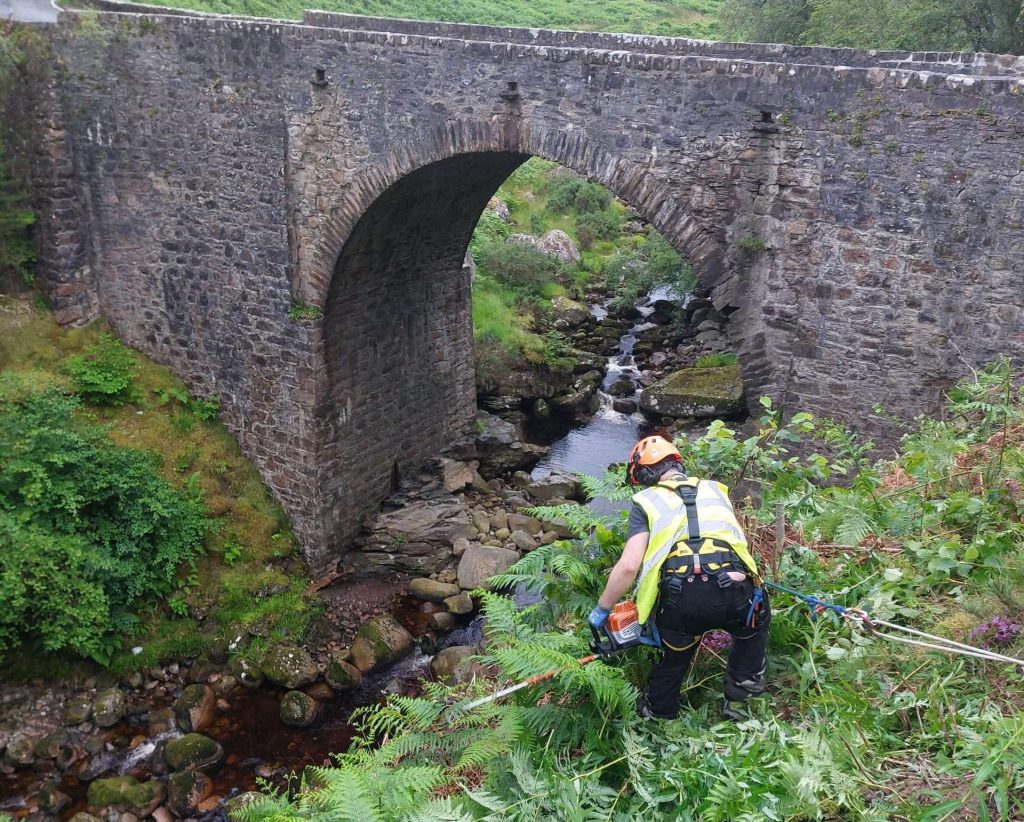
In October 2024, Highland Access Ltd successfully completed a Rope Access De-vegetation project for the Highland Council. The task involved clearing vegetation near a bridge that obstructed the view of oncoming traffic. This safety-critical work was completed in just one day by a team of two IRATA and NPTC-trained technicians. By using rope access techniques, the team efficiently removed the vegetation, restored visibility for road users, and improved overall safety.
Problem
Overgrown vegetation near the bridge had created a serious hazard. It blocked drivers’ views of oncoming traffic, which significantly increased the risk of accidents. Furthermore, the steep terrain around the site made traditional methods, such as machinery, impractical. As a result, the Highland Council required a fast, safe, and cost-effective solution. Rope Access De-vegetation provided the ideal approach to address the issue quickly and efficiently.
Solution
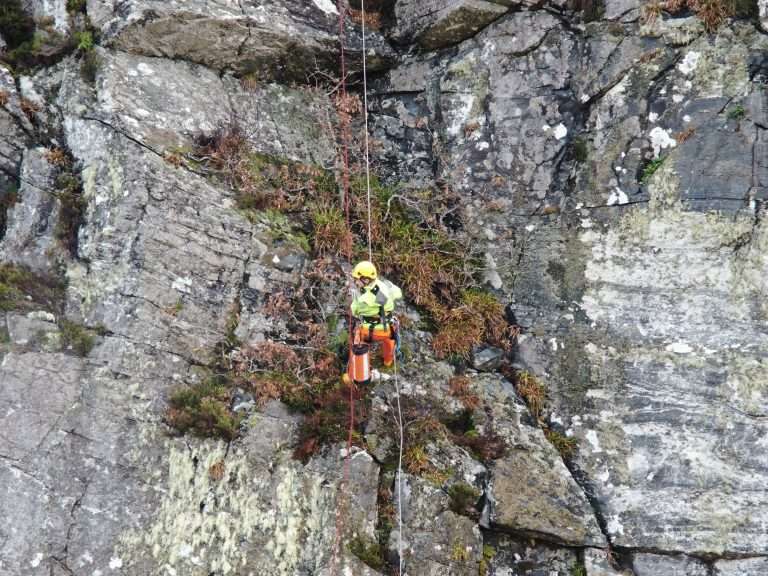
To resolve the problem, Highland Access Ltd deployed two skilled technicians trained in IRATA and NPTC standards. The team used Rope Access De-vegetation techniques to access the steep and challenging terrain. They worked with hand tools and chainsaws to remove the vegetation precisely and efficiently.
Moreover, rope access allowed the team to complete the work without relying on heavy machinery. This approach not only reduced costs but also minimised disruption to road users. Additionally, it ensured the safety of both the technicians and the surrounding environment.
Process
The project followed a clear and structured process to ensure safety and efficiency:
- Site Assessment: First, the team assessed the site to identify the vegetation that required removal. They planned the safest and most efficient approach for the Rope Access De-vegetation work.
- Rope Access Setup: Next, the technicians set up rope systems to safely access the steep terrain around the bridge.
- Vegetation Removal: The team used hand tools and chainsaws to remove the vegetation. They carefully lowered all cut material to the ground to avoid risks to road users or the environment.
- Final Inspection: Finally, after clearing the vegetation, the team inspected the area to confirm that visibility for drivers had been fully restored.
Importance
This Rope Access De-vegetation project demonstrates the effectiveness of rope access for managing vegetation in challenging environments. The work was completed in a single day, which minimised disruption to road users. By using rope access, the team avoided the need for heavy machinery, which significantly reduced costs for the client.
Additionally, the project ensured the highest safety standards. IRATA and NPTC-trained technicians worked with precision to remove the vegetation without damaging the surrounding environment. As a result, visibility for drivers was fully restored, and road safety was greatly improved.
Key Benefits:
- Time Efficiency: The Rope Access De-vegetation work was completed in just one day, minimising disruption.
- Cost Savings: Rope access eliminated the need for machinery, which reduced costs.
- Safety: IRATA and NPTC-trained technicians ensured safe and efficient operations.
- Precision: Vegetation was removed carefully, restoring visibility without unnecessary environmental impact.
- Adaptability: Rope access allowed the team to work in steep and challenging terrain that traditional methods could not handle.