Location – Arran
Client – The National Trust
Introduction – Rope Access Rhododendron Stem Injection
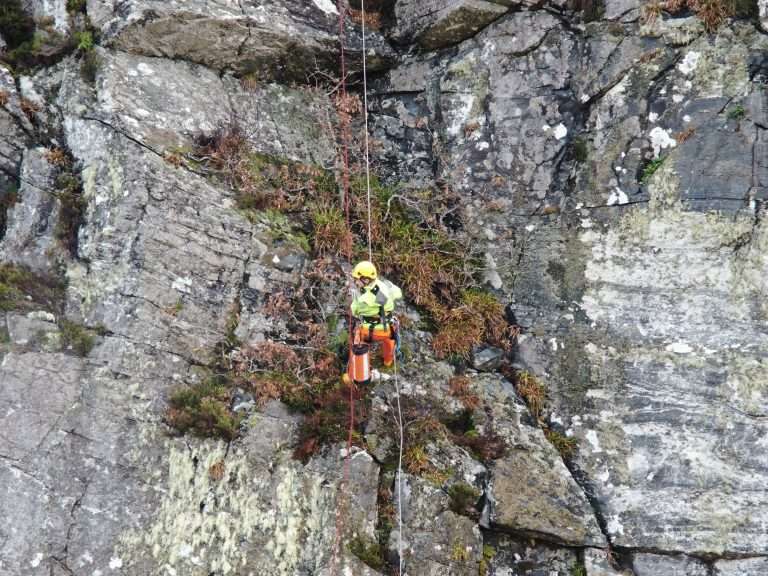
In February 2024, Highland Access Ltd carried out a week-long rope access rhododendron control project for the National Trust. The work focused on removing and controlling invasive species, including rhododendron, salmonberry, and western hemlocks. The team used rope access rhododendron control techniques to safely work in steep gorges and slopes, ensuring all areas were treated thoroughly. They followed FISA (Forest Industry Safety Accord), SEPA (Scottish Environment Protection Agency), and IRATA (Industrial Rope Access Trade Association) standards. Additionally, the team placed all cut hemlocks into habitat piles to support local wildlife.
Problem
Invasive species like rhododendron, salmonberry, and western hemlocks cause serious harm to native ecosystems. These plants grow quickly, outcompeting local flora and disrupting wildlife habitats. They also block natural woodland regeneration, which is essential for maintaining healthy forests. Without proper management, these species can dominate landscapes, making it harder for native plants and animals to survive. Therefore, the project required effective rope access rhododendron techniques & methods to control these species while minimising environmental impact.
Solution
Highland Access Ltd sent a team of three IRATA-certified technicians to tackle the problem. The team used rope access rhododendron control techniques to safely navigate steep and remote areas. Each invasive species was managed with a specific approach:
- Rhododendron: For rope access rhododendron control, the team drilled into the plants and injected herbicide directly into the stems. This method targeted the root system, reduced chemical use, and protected nearby vegetation. Furthermore, this approach ensured that the rhododendron was controlled effectively without harming the surrounding environment.
- Salmonberry: Technicians removed salmonberry by hand. This approach ensured precision and avoided damage to native plants. Additionally, manual removal allowed the team to work carefully in areas with dense vegetation.
- Western Hemlocks: Chainsaws were used to cut down these non-native trees. The team placed all cut material into habitat piles to support local wildlife. As a result, this step contributed to the restoration of the ecosystem and provided valuable resources for animals.
By combining these techniques with rope access, the team worked efficiently and safely. As a result, they ensured all affected areas were treated effectively. Moreover, rope access rhododendron control techniquesallowed the team to reach even the most challenging locations.
Process
The project followed a clear and structured process to ensure safety, efficiency, and environmental compliance:
Planning: The team created a detailed plan based on FISA, SEPA, and IRATA guidelines. This ensured that all work met the highest safety and environmental standards. Additionally, the planning phase allowed the team to identify the best methods for each invasive species.
Stem Injection: The team drilled into rhododendron plants and injected herbicide. This targeted approach reduced the need for widespread chemical application and minimised harm to nearby vegetation. Furthermore, this method ensured that the rhododendron was controlled at its root system.
Manual Removal: Technicians carefully removed salmonberry by hand. This method allowed for precision and ensured that native plants remained undisturbed. In addition, manual removal reduced the risk of damaging the surrounding ecosystem.
Chainsaw Work: Western hemlocks were felled using chainsaws. The team repurposed all cut material into habitat piles, which provided valuable resources for local wildlife. Consequently, this step supported biodiversity and helped restore the natural balance of the area.
Rope Access: IRATA-certified technicians used rope access techniques to safely work in steep and challenging terrains. Therefore, even the most remote areas were treated effectively.
Importance
Removing invasive species like rhododendron is essential for protecting native ecosystems and promoting biodiversity. These plants can dominate landscapes, preventing the growth of native plants and disrupting wildlife habitats. By using rope access and following FISA, SEPA, and IRATA standards, Highland Access Ltd ensured the project was completed safely and sustainably. Additionally, the creation of habitat piles from cut hemlocks provided valuable resources for local wildlife. As a result, the project contributed to the restoration and long-term health of the affected areas. Moreover, the careful and eco-friendly methods used in this project demonstrate the importance of sustainable invasive species management.